News


admin
December 7, 2023
Canada’s Grand Return to Express Entry Draws in 2023!
So, you’re dreaming of maple leaves, poutine, and the breathtaking landscapes of the Great White North, right? Well, guess what? Canada’s latest Express Entry draw is your golden ticket to make those dreams a reality!
Recently, Canada’s Express Entry draws made a comeback after a pause since October 26. Immigration Refugees and Citizenship Canada (IRCC) recently sent 4,750 invitations to apply (ITAs) in the latest Express Entry draw.
You needed a Comprehensive Ranking System (CRS) score 561 to hop on this Canadian adventure.
Breaking the quiet spell since October 26, Canada’s Express Entry draws are back in action. The plot thickened when the Immigration Refugees and Citizenship Canada (IRCC) dropped a tweet bomb on November 14, revealing a hiccup with the Express Entry Profile Builder. It got sorted by November 16, but was this the reason for the draw break? It’s unclear.
On October 26, 3,600 candidates got Invitations to Apply (ITAs) in a draw focused on healthcare jobs. They needed a minimum Comprehensive Ranking System (CRS) score of 431.
The same week saw additional activity. On October 25, 300 candidates with proficient French skills received invitations with a minimum CRS score of 486. On October 24, 1,548 candidates were invited to a Provincial Nominee Program (PNP)-only draw. However, this draw required a higher minimum score of 776. Why? Because PNP candidates receive an extra 600 CRS points, the minimum CRS for this draw type is more elevated.
Summary of Express Entry Draws Since June 2023
Data source: CIC News
|
Date |
Draw Type | Number of ITAs |
Minimum CRS |
|
Oct 26 |
Healthcare occupations | 3,600 |
431 |
|
Oct 25 |
French language proficiency | 300 |
486 |
|
Oct 24 |
PNP-only | 1,548 |
776 |
|
Oct 10 |
All-program | 3,725 |
500 |
|
Sept 28 |
Agriculture and agri-food occupations | 600 |
354 |
|
Sept 27 |
French language proficiency | 500 |
472 |
|
Sept 26 |
All-program | 3,000 |
504 |
|
Sept 20 |
Transport occupations | 1,000 |
435 |
|
Sept 19 |
All-program | 3,200 |
531 |
|
Aug 15 |
All-program | 4,300 |
496 |
|
Aug 3 |
Trade occupations | 1,500 |
388 |
|
Aug 2 |
French language proficiency | 800 |
435 |
|
Aug 1 |
All-program | 2,000 |
517 |
|
July 12 |
French language proficiency | 3,800 |
375 |
|
July 11 |
All-program | 800 |
505 |
|
July 7 |
French language proficiency | 2,300 |
439 |
|
July 6 |
Healthcare occupations | 1,500 |
463 |
|
July 5 |
STEM occupations | 500 |
486 |
|
July 4 |
All-program | 700 |
511 |
|
June 28 |
Healthcare occupations | 500 |
476 |
|
June 27 |
All-program | 4,300 |
486 |
|
June 8 |
All-program | 4,800 |
486 |
Category-Based Selection:
In May 2023, Canada’s immigration authorities (IRCC) announced a new way to select candidates for permanent residency called category-based selection. This means they will hold special Express Entry draws targeting specific groups of skilled workers instead of inviting applicants with the highest overall scores.
These unique draws focus on three main categories:
- Language: Candidates who meet specific French or English language proficiency requirements.
- Occupation: Workers in five key fields face labour shortages: healthcare, STEM (science, technology, engineering, and math), trades, transportation, agriculture, and agri-food.
- Other: Depending on Canada’s needs, additional categories may be introduced.
Category-based selection aims to address skill shortages in crucial sectors and boost Canada’s economy and essential services like healthcare and supply chains. This approach allows IRCC to target areas with a high demand for skilled professionals, making the immigration process more efficient and responsive to Canada’s changing needs.
What Lies Ahead: Challenges or Cheers?
As we explore Canada’s immigration dynamics, Immigration Minister Marc Miller emerges as a central figure, emphasising the pivotal role of welcoming skilled workers to counter impending shortages. With an anticipated nine million Canadians set to retire by 2030, the significance of qualified professionals becomes increasingly pronounced.
As outlined in the current Immigration Levels Plan for 2023-2025, there is a commitment to admitting 114,000 Federal High Skilled (Express Entry) immigrants annually by the conclusion of 2025. This plan is a promising opportunity for individuals aspiring to establish roots in Canada.
However, the narrative takes an unexpected turn in a recent meeting of the Standing Committee on Citizenship and Immigration. Despite ambitious targets, a discernible deceleration in Express Entry draws during Minister Miller’s tenure prompts contemplation on the challenges encountered by the Canadian immigration system.
Deputy Immigration Minister Christiane Fox steps into the storyline, providing insights into the obstacles faced. Introducing new categories faced a setback due to an IT glitch, leading to a reduction in draw numbers. However, Fox assures that the department is committed to compensating for this setback as they progress.
The Deputy Minister announced a category-based draw for skilled trades professionals in December this year, introducing another dimension to the unfolding narrative. This proactive step aims to address specific skill shortages within the Canadian workforce.
Since introducing category-based draws in June, Canada has issued invitations through this selection method 12 times, accumulating over 11,000 Invitations to Apply (ITAs). Notably, all these candidates were already part of the Express Entry pool, underscoring the efficacy of this targeted approach.
The narrative of Canada’s immigration journey continues to evolve. Challenges persist, but the commitment to addressing shortages and adapting strategies signals a resilient approach to shaping the future of Canadian immigration.
With more draws promised, let’s see what happens next in Canada’s Express Entry story. Stay tuned for updates on the journey to a new home in Canada!
–> For More Details Whatsapp Us

You May Also Like
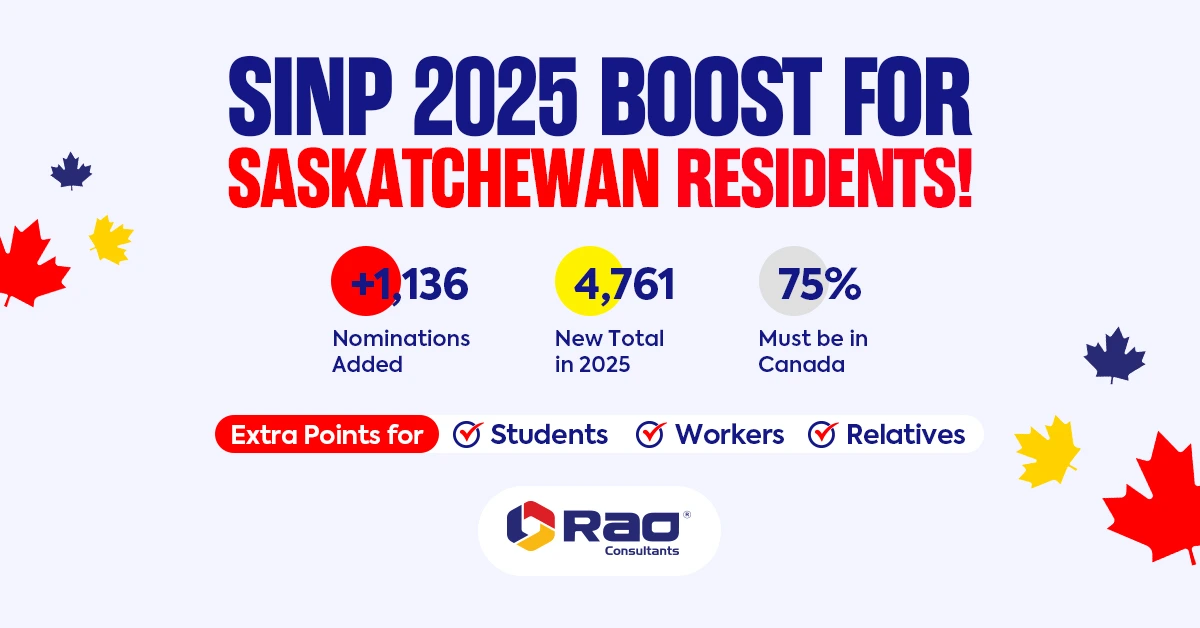
SINP 2025 Update: Saskatchewan Gets 1,136 Extra Nominations – Total Now 4,761
Saskatchewan has received 1,136 additional provincial nomination spaces for 2025 under the Saskatchewan Immigrant Nominee Program (SINP), taking the province’s total allocation to 4,761 for the year. The boost follows earlier reductions to provincial allocations and is aimed at easing labour shortages in key sectors. What changed – and why it matters More nomination spaces […]
Read More
Canada to Accept TOEFL Essentials Test for Permanent Residency Applicants
Toronto, August 2025 – In a move to broaden language testing options, Immigration, Refugees and Citizenship Canada (IRCC) has confirmed that it will soon accept the TOEFL Essentials test, administered by the Educational Testing Service (ETS), as an official proof of English proficiency for permanent residency (PR) applications New Accessible Pathway for Applicants The inclusion […]
Read More
Government Raises Income Thresholds for Hosting Parents and Grandparents in Canada
As of July 29, 2025, Canadian hosts wishing to bring their parents or grandparents under the Super Visa program must meet higher minimum income thresholds, reflecting a 3.9% increase over 2024 levels. 💰 New Income Requirements by Family Size (Canadian Dollars) Family Size Minimum Income Needed in 2025 Minimum Income in 2024 1 (sponsor alone) […]
Read More