News

admin
January 13, 2025
IRCC Adds New Programs to PGWP-Eligible Fields of Study

Immigration, Refugees, and Citizenship Canada (IRCC) has announced a significant change to its Post-Graduation Work Permit (PGWP) program, that is effective from December 17, 2024. The eligibility requirements have been increased to accommodate additional programs under a newly created category—Education.
The growing need for certified employees in early childhood care and related educational fields is addressed via way of means of this decision. Agriculture and agri-food, healthcare, STEM (science, technology, engineering, and mathematics), trades, and transportation had been formerly covered at the PGWP eligibility list. The Education category`s inclusion is a proactive circulate to cope with the staff scarcity in those important fields.
Newly Added Programs in the Education Category
The following programs are now eligible for PGWP:
- Developmental Services Worker
- Montessori Teacher Education
- Waldorf/Steiner Teacher Education
- Early Childhood Education and Teaching
- Teaching Assistants/Aide, General
- Child Development
- Child Care and Support Services Management
- Child Care Provider/Assistant
- Early Childhood and Family Studies
Who Does This Impact?
This update applies to international students who are pursuing professional programs at accredited college and university in Canada. However, if you graduated from a Canadian institution and obtained a bachelor’s, master’s or doctoral degree, you are still exempt from some of the major requirements.
Additionally, this change has no influence on students who applied for study permits before to November 1, 2024. The extra standards will apply only to persons who apply for fresh study permits after this date.
Why This Matters
Depending on the length of their study program, international student can stay and work in Canada for up to three years under the PGWP, which enables them to obtain meaningful Canadian job experience following graduation. Through initiatives like the Canadian Experience Class (CEC), this job experience frequently serves as a springboard for obtaining permanent residency (PR).
The IRCC hopes to draw talent to early childhood care and education—areas that have seen ongoing staffing shortages—by including initiatives that are education-focused. Stakeholders, notably the Canadian Bureau for International Education (CBIE), have praised this update, acknowledging the important gap that this decision helps close.
What Should Students Do Next?
It is essential for potential candidates and overseas students to remain up to speed on these developments. Students who intend to study in Canada should carefully assess which programs are eligible and think about how this expansion fits with their professional objectives. To guarantee adherence to these new rules, seeking advice from an immigration specialist can offer customized recommendations.
The IRCC’s decision to expand PGWP eligibility to include education-related programs demonstrates Canada’s commitment to addressing labor market needs while creating new opportunities for international students. To check whether you are eligible and to know more about these changes get in touch with our experts.
You May Also Like
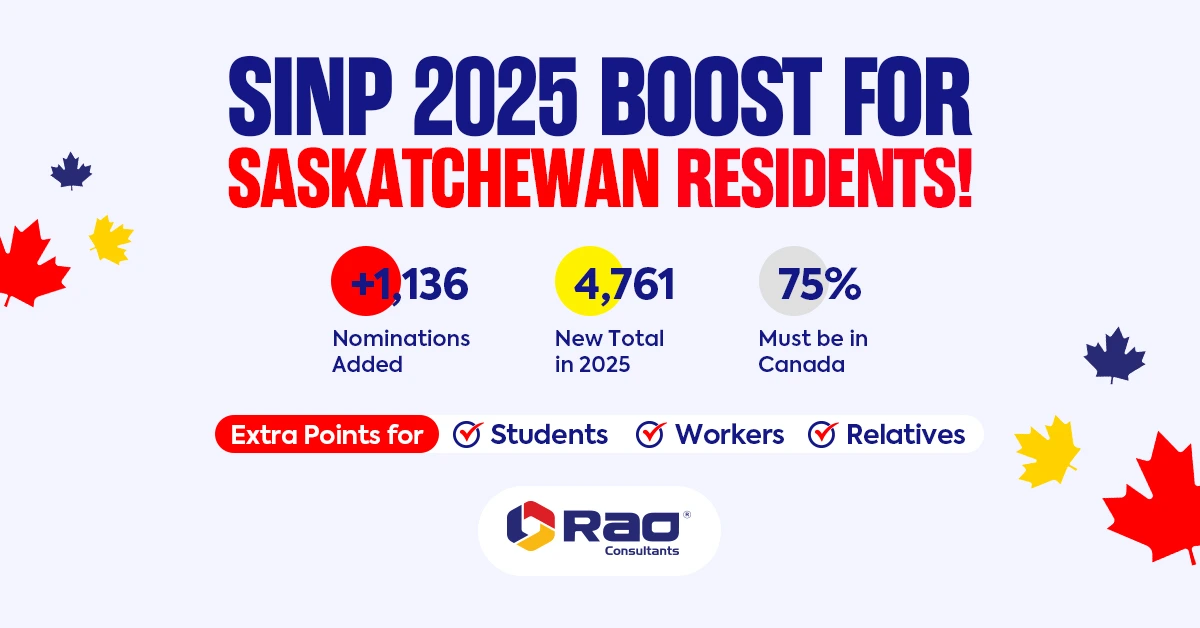
SINP 2025 Update: Saskatchewan Gets 1,136 Extra Nominations – Total Now 4,761
Saskatchewan has received 1,136 additional provincial nomination spaces for 2025 under the Saskatchewan Immigrant Nominee Program (SINP), taking the province’s total allocation to 4,761 for the year. The boost follows earlier reductions to provincial allocations and is aimed at easing labour shortages in key sectors. What changed – and why it matters More nomination spaces […]
Read More
Canada to Accept TOEFL Essentials Test for Permanent Residency Applicants
Toronto, August 2025 – In a move to broaden language testing options, Immigration, Refugees and Citizenship Canada (IRCC) has confirmed that it will soon accept the TOEFL Essentials test, administered by the Educational Testing Service (ETS), as an official proof of English proficiency for permanent residency (PR) applications New Accessible Pathway for Applicants The inclusion […]
Read More
Government Raises Income Thresholds for Hosting Parents and Grandparents in Canada
As of July 29, 2025, Canadian hosts wishing to bring their parents or grandparents under the Super Visa program must meet higher minimum income thresholds, reflecting a 3.9% increase over 2024 levels. 💰 New Income Requirements by Family Size (Canadian Dollars) Family Size Minimum Income Needed in 2025 Minimum Income in 2024 1 (sponsor alone) […]
Read More