Book An Appointment Book Online Video Counselling

What to Expect in the IELTS Examination?

Loading

The International English Language Testing System, commonly known as IELTS, is a crucial examination for individuals looking to study, work, or migrate to English-speaking countries. It’s recognized worldwide as a reliable assessment of English language proficiency. To succeed in the IELTS examination, it’s essential to understand what to expect. In this blog, we’ll explore the various aspects of the IELTS examination, including its format, expectations, and how to prepare effectively. We’ll also touch upon the significance of IELTS coaching, focusing on the offerings of Rao Consultants in Ahmedabad.

Understanding the IELTS Examination

Before diving into what to expect in the IELTS examination, let’s first understand the basics of this test. The IELTS examination assesses a test-taker’s ability to understand, communicate, and interact in English in various contexts. It consists of four main components:

  1. Listening: This section evaluates your ability to understand English, including conversations and monologues. Test-takers listen to audio recordings and answer questions based on what they hear.
  2. Reading: In the reading section, you are presented with a variety of texts and are required to answer questions related to the content. The texts vary in complexity, and you must demonstrate your reading comprehension skills.
  3. Writing: Test-takers are assessed on their ability to present ideas coherently and write essay and letter/report in response to given prompts.
  4. Speaking: The speaking test is a face-to-face interview with an examiner, where you’ll discuss various topics, express opinions, and engage in conversations.

Deciphering IELTS Requirements

Now, let’s delve into what the IELTS examination expects from candidates:

  • Language Proficiency: The primary expectation is that you possess a strong command of the English language. You should be able to use a wide range of vocabulary, use correct grammar and syntax, and pronounce words accurately.
  • Adaptability: The IELTS examination is designed to test your ability to adapt to different accents and dialects. The listening section, in particular, presents a variety of accents, including British, American, Australian, and Canadian, to name a few.
  • Time Management: Each section of the IELTS examination has a strict time limit. It’s essential to manage your time effectively to complete all tasks within the allocated time.
  • Analytical Skills: In the reading and writing sections, you’ll need to demonstrate analytical skills. You must comprehend the main ideas of texts and develop well-structured essays or reports.
  • Fluency and Coherence: When speaking and writing, you are expected to communicate clearly, coherently, and with fluency. This means maintaining a logical flow in your speech and writing, and avoiding excessive pauses or hesitation.
  • Content Relevance: Your responses in the speaking and writing sections should be directly related to the given topics or prompts. Irrelevant or off-topic responses will negatively impact your score.

IELTS Exam Preparation

Preparing for the IELTS examination is crucial to meet the expectations and perform well. Here are some key aspects of IELTS exam preparation:

  1. Vocabulary Building: Enhance your vocabulary by learning new words and phrases. This will help you express yourself more effectively in both the speaking and writing sections.
  2. Practice Tests: Familiarize yourself with the IELTS format by taking practice tests. These simulate the actual exam conditions and help you get comfortable with the time constraints.
  3. Listening Practice: Listen to a variety of English audio materials, such as podcasts, interviews, and news broadcasts, to improve your listening skills.
  4. Reading Practice: Read a wide range of texts, including newspapers, magazines, and academic articles, to improve your reading comprehension.
  5. Writing Practice: Work on your writing skills by practicing essay and report writing. Pay attention to essay structure and organization.
  6. Speaking Practice: Engage in conversations in English with native speakers or fellow test-takers to improve your speaking skills. You can also record yourself and evaluate your speaking performance.
  7. Time Management: Learn to manage your time during the examination. For instance, in the reading section, don’t spend too much time on a single question. If you’re unsure, move on and come back to it later.

IELTS Exam Expectations

Apart from individual skills, there are some specific expectations for each section of the IELTS examination:

  • Listening: You will listen to four recordings, each with a set of questions. Pay attention to the instructions and take notes while listening. The recording will only be played once.
  • Reading: The reading section consists of three long texts with questions. Expect to encounter various types of questions, such as multiple-choice, true/false/not given, and matching information.
  • Writing: You will be given two writing tasks – Task 1 (a report) and Task 2 (an essay). Task 2 is worth more points, so allocate your time accordingly. In Task 2, make sure you present a clear argument and support it with relevant examples.
  • Speaking: During the speaking section, the examiner will ask you a range of questions. Be prepared to discuss a variety of topics, including personal experiences, opinions, and abstract ideas. Keep your answers detailed and avoid one-word responses.

The Significance of IELTS Coaching

IELTS preparation can be an overwhelming task, especially if you’re not sure where to begin. This is where IELTS coaching comes into play. IELTS coaching in Ahmedabad, provide valuable support and resources to help you achieve your desired scores. Here’s why you should consider choosing Rao Consultants for your IELTS preparation:

  • Expert Guidance: Rao Consultants boasts a team of experienced and highly qualified instructors who are well-versed in the IELTS examination. They can provide personalized guidance and feedback to help you improve your skills.
  • Comprehensive Study Material: Coaching centers like Rao Consultants typically offer a wide range of study materials, including practice tests, sample essays, and speaking tasks. These materials are essential for effective exam preparation.
  • Structured Curriculum: Rao Consultants can provide you with a structured curriculum that covers all four sections of the IELTS examination. This ensures that you receive a comprehensive education on what to expect and how to prepare.
  • Mock Tests: Mock tests are a vital component of IELTS preparation. Rao Consultants can administer mock tests that simulate the actual exam conditions, helping you get used to the time constraints and testing environment.
  • Feedback and Evaluation: One of the key benefits of coaching is the constant feedback and evaluation. Rao Consultants can assess your progress and pinpoint areas that need improvement.
  • Confidence Building: IELTS coaching centers can boost your confidence by providing you with the skills and knowledge required to excel in the examination.

Conclusion

In conclusion, the IELTS examination expects candidates to demonstrate proficiency in English language skills, adaptability to various accents, effective time management, analytical thinking, and coherent communication. To meet these expectations, thorough preparation is essential. IELTS coaching in Ahmedabad offer valuable support and resources to help you achieve your goals. With the right guidance and practice, you can confidently face the IELTS examination and make your dreams of studying, working, or migrating to English-speaking countries a reality.

If you’re considering IELTS preparation, why not choose Rao Consultants for the best guidance and support? Our experienced instructors, comprehensive study materials, and structured curriculum will help you achieve your desired IELTS scores. Join us today and take the first step toward your international dreams.


Targeted Occupations in Canada PR Express Entry STEM workers in High Demand!

Loading

Canada is facing a shortage of skilled workers in many sectors, including science, technology, engineering, and mathematics (STEM), healthcare, transport, trades and agriculture/agri-food. To address this shortage, the Canadian government has prioritized STEM occupations in its Express Entry Immigration program.

Express Entry is a points-based system for selecting immigrants who are skilled workers or have the potential to become skilled workers. Candidates are ranked in a pool based on their Comprehensive Ranking System (CRS) score, which is calculated based on factors such as age, work experience, education, and language skills.

The highest-scoring candidates are invited to apply for Canada PR Visa. In recent years, the government has held targeted Express Entry draws for candidates in STEM occupations. This means that candidates with work experience in STEM occupations have a better chance of being invited to apply for permanent residence, even if their CRS score is lower than the cut-off score for regular Express Entry Draws.

Why STEM Became a Priority in Express Entry Selection:

Bridging the Skills Gap in Canada’s Thriving Tech Sector

By the end of 2022, Statistics Canada unveiled a report underscoring the imperative need to address the skills deficit within Canada’s STEM workforce. This deficiency arises primarily from the substantial retirement rates and the continuous evolution of technology and automation, permeating both businesses and daily life.

Notably, Canada’s Artificial Intelligence (AI) sector has been experiencing exponential growth, leading to a heightened demand for technology professionals. The nation has earned the fourth spot in the Global AI Index’s global competitiveness rankings, reflecting its prowess in innovation, implementation, and investment.

The Honorable François-Philippe Champagne, Minister of Innovation, Science and Industry, commented, “Canada’s exceptional capacity to attract top-tier talent is one of its core strengths. This newly introduced STEM-focused selection round is set to bolster our science and technology sector and its workforce by attracting an even larger pool of skilled professionals, essential for propelling innovation and unlocking growth opportunities.”

He further emphasized, “With its unrivaled talent attraction capabilities and the innovative potential of its entrepreneurs, Canada stands as the premier global destination for launching and expanding technology enterprises.”

How Many STEM Professionals Does Canada Demand?

The Canadian Occupational Projection System (COPS), administered by Employment and Social Development Canada (ESDC), offers insights into the employment prospects within various occupations. It also estimates the anticipated job opportunities in specific professions throughout the 2022 to 2031 period.

Here are some outlooks for STEM careers:

Occupation

Opportunities

Software engineers and designers

Anticipating 44,300 fresh job opportunities

Computer programmers and interactive media developers

Envisioning 80,500 upcoming job openings

Civil engineering

Projecting 26,100 new job prospects

Mechanical engineering

Foreseeing 12,700 additional positions

Industrial and manufacturing engineering

Predicting 3,800 new job slots

Electrical and electronics engineering

Expecting 12,600 more employment opportunities

Mathematicians, statisticians, and actuaries

Anticipating 4,600 fresh job openings

Technical occupations in physical sciences

Predicting 12,200 new job positions

These statistics indicate a substantial demand for hundreds of thousands of proficient STEM professionals to meet the forthcoming job vacancies and address labor shortages in Canada.

What Prospects Await Potential Immigrants to Canada?

As per the Express Entry year-end report for 2022, the predominant occupations receiving invitations to apply (ITAs) were centered around the technology sector. Specifically, software engineers and designers, information system specialists, and computer systems developers and programmers emerged as the most prevalent occupations among candidates who received ITAs through Express Entry in 2022.

Consequently, skilled STEM professionals aspiring to relocate to Canada may find opportunities through category-based Express Entry draws tailored to STEM workers. These proficient individuals will play a pivotal role in bridging labor market shortages and fostering the growth of Canada’s STEM sector while simultaneously pursuing meaningful careers in the country.

Past STEM Express Entry Draws Overview

Up to this point, IRCC has conducted a single round of invitations exclusively for skilled individuals in STEM fields.

This draw occurred on July 5th, wherein 500 immigration candidates possessing STEM-related work experience received invitations to apply for Canadian permanent residence. The candidates in this draw were required to have a minimum Comprehensive Ranking System (CRS) score of 486.

For an up-to-date record of all Express Entry draws organized by IRCC, you can refer to this link, as the page will be refreshed with each new draw.

Best Courses to Pursue Abroad after B.Com

Loading

The world is evolving at a breakneck pace, and the job market is no exception. New technologies continually emerge, and businesses must adapt to meet evolving customer needs. Consequently, employers seek different skills and knowledge in job candidates. For B.Com graduates, this underscores the importance of selecting a course that equips them with the necessary skills to succeed in today’s dynamic workplace. The courses listed above are highly esteemed and offer significant earning potential and career growth opportunities.

However, when choosing a course, don’t solely focus on earning potential. Consider your interests and career objectives. What are your aspirations? What truly excites you? Opt for a course that aligns with your career goals and ignites your passion.

Here are several compelling reasons why you should contemplate pursuing a degree in an emerging field:

High Earning Potential: B.Com graduates with advanced degrees in emerging fields often command significantly higher salaries. For instance, the median annual salary for a Master of Data Science graduate exceeds $100,000.

Increased Job Opportunities: The demand for skilled professionals in emerging fields is skyrocketing, translating into a plethora of job opportunities for graduates in these areas.

Exciting and Rewarding Work: Emerging fields are at the forefront of innovation and discovery. If you’re passionate about tackling complex problems and making a real impact, a degree in an emerging field will offer precisely that opportunity.

Moreover, pursuing a degree in an emerging field can provide a competitive edge in the global job market. As companies expand internationally, they actively seek employees with expertise in these cutting-edge areas.

If you’re a B.Com graduate eager to embark on a journey into an emerging field, here’s how you can get started:

Research: Spend time exploring various emerging fields to identify one that resonates with your interests and aspirations.

University Selection: Once you’ve decided on a field, research universities and programs that offer degrees in that specific domain.

By pursuing a degree in an emerging field, you’re not just shaping your future for success; you’re also making a meaningful impact on the world. The world is teeming with exciting opportunities, and pursuing further education abroad can open the door to a world of possibilities.

Now, let’s delve into some of the best courses to consider after your B.Com:

  1. Master of Business Administration (MBA):

An MBA equips you with in-depth knowledge of business management and leadership.

Consider esteemed institutions like Harvard, Stanford, INSEAD, or London Business School for enhanced career prospects.

  1. Master of Finance:

For those inclined toward finance, a Master of Finance offers a rigorous curriculum and global networking opportunities, as exemplified by the University of Oxford.

  1. Master of International Business (MIB):

In our increasingly globalized world, understanding international business is paramount.

Programs like the one at Hult International Business School can provide valuable insights into the complexities of global commerce.

  1. Master of Economics:

For economics enthusiasts, a Master of Economics paves the way for careers in research, policy analysis, and academia.

Institutions like the University of Chicago and the London School of Economics are renowned for their economics programs.

  1. Master of Marketing:

Marketing is an ever-evolving field, and a Master of Marketing equips you with the latest strategies and techniques.

Consider top-notch marketing programs offered by schools like Northwestern University’s Kellogg School of Management.

  1. Master of Entrepreneurship:

If you dream of starting your own business or joining a startup, a Master of Entrepreneurship can provide you with the tools, knowledge, and network to turn your entrepreneurial vision into reality.

Stanford University’s Graduate School of Business offers a renowned program in this field.

  1. Master of International Finance:

For those interested in global finance and banking, a Master of International Finance can be your gateway to a successful international career.

Programs at institutions like the University of Amsterdam are highly regarded in this area.

Emerging Fields and Their Potential:

Accounting:

Data Analytics and Visualization: Accountants with data analytics and visualization skills are in high demand, with an average salary of $71,000 per year in the US.

Forensic Accounting: Forensic accountants investigate financial crimes and earn an average salary of $80,000 per year in the US.

Information Systems Auditing: Information systems auditors evaluate the security and controls of computer systems and networks, with an average salary of $85,000 per year in the US.

Sustainability Accounting: Sustainability accountants help businesses measure and report on their environmental and social performance, earning an average salary of $90,000 per year in the US.

Finance:

Financial Technology (Fintech): Fintech professionals with an average salary of $120,000 per year in the US are reshaping the financial industry.

Investment Banking: Investment bankers advise companies on raising capital and mergers and acquisitions, with an average salary of $150,000 per year in the US.

Private Equity: Private equity firms invest in private companies with the goal of growing them and selling them for a profit, with an average salary of $175,000 per year for a private equity associate in the US.

Venture Capital: Venture capital firms invest in early-stage start-ups, with an average salary of $200,000 per year for a venture capital associate in the US.

Digital Marketing:

Content Marketing: Content marketers create valuable content to engage their target audience, with an average salary of $75,000 per year in the US.

Data-Driven Marketing: Data-driven marketers use data to inform marketing decisions and earn an average salary of $85,000 per year in the US.

Inbound Marketing: Inbound marketers focus on attracting and engaging customers through valuable content, with an average salary of $70,000 per year in the US.

Search Engine Optimization (SEO): SEO professionals optimize websites for higher search engine rankings, utilizing techniques like keyword research and content optimization.

Earning Potential and Career Advancement

The earning potential and career advancement opportunities after completing study abroad programs in foreign countries, your earning potential and career advancement can significantly vary based on your chosen field. Graduates with a Master of Business Administration (MBA) from prestigious institutions can command six-figure salaries and leadership roles in multinational companies. In finance and economics, a master’s degree can open doors to well-paying positions as financial analysts, investment bankers, or economists in government agencies and research institutions. International business graduates often find opportunities with competitive compensation in global corporations and trade organizations. Those in marketing and entrepreneurship can achieve respectable income levels, with marketers pursuing marketing management roles. International finance and emerging fields like data science offer competitive salaries. The actual earning potential depends on location, industry, experience, and personal skills, making it crucial to research specific fields and regions while also networking and seeking internships to further your career.

Shaping Your Future

The world is your oyster after completing a B.Com degree. By choosing the right path and specializing in a field that aligns with your interests and career goals, you can shape a bright and rewarding future. Consider your passion, the current job market, and your personal circumstances as you embark on this exciting journey. Study Abroad Consultants can also broaden your horizons, making you a more adaptable and culturally aware professional.

Best Program to Pursue Abroad After MBBS

Loading

As a medical graduate, you have a strong foundation in the science and practice of medicine. You have the skills and knowledge to provide high-quality care to your patients. But what if you want to take your career to the next level? What if you want to earn a higher salary and have the opportunity to work on cutting-edge projects?

One way to do that is to pursue further studies in an emerging field of medicine. Emerging fields are growing rapidly and offer new and exciting opportunities. Some of the most popular emerging fields for medical graduates include telemedicine, digital health, artificial intelligence (AI) in medicine, precision medicine, regenerative medicine, and gene editing.

Here are just a few reasons why you should consider pursuing a degree in an emerging field of medicine:

  • Medical graduates with advanced degrees in emerging fields can earn significantly higher salaries than those who do not. For example, the median annual salary for a medical doctor with a specialization in telemedicine is $250,000+.
  • The demand for skilled workers in emerging fields of medicine is growing rapidly. This means that you will have more job opportunities to choose from if you have a degree in an emerging field.
  • Emerging fields of medicine are at the forefront of innovation and discovery. If you are passionate about solving complex problems and making a real difference in the world, a degree in an emerging field of medicine will give you the opportunity to do just that.

In addition to these general benefits, pursuing a degree in an emerging field of medicine can also give you a competitive edge in the global job market. As more and more healthcare organizations are expanding their operations internationally, they are looking for employees with skills and experience in emerging fields of medicine.

If you are a medical graduate who is interested in pursuing a degree in an emerging field, there are a number of things you can do to get started. Many medical graduates consider pursuing further study abroad to specialize in a particular area or explore career opportunities beyond clinical practice. In this blog, we’ll discuss some of the best courses to consider after completing MBBS.

Master of Public Health (MPH)

Public health plays a vital role in shaping the overall health of communities and populations. An MPH program equips you with the knowledge and skills to address public health challenges, from epidemiology to health policy. Graduates can work with governmental agencies, non-profits, or international organizations to tackle issues like disease prevention, health education, and healthcare management.

Master of Health Care Administration

A master’s in Health Care Administration focuses on healthcare leadership and management. This program trains you to oversee healthcare facilities, make strategic decisions, and ensure efficient healthcare delivery. Graduates are well-prepared for roles in hospital administration, health policy, and healthcare consulting.

Post Graduate in Health Care Leadership

Healthcare leadership programs are designed to develop your leadership skills in the healthcare sector. These programs are ideal if you aspire to take on leadership roles in healthcare organizations, driving positive change and improving patient care.

Post Graduate in Health Informatics

Health informatics programs focus on the effective use of technology and data in healthcare. Graduates become experts in managing health information systems and ensuring that healthcare data is used effectively for decision-making.

Post Graduate in Health Care Administration and Management

This program combines healthcare administration and management, providing you with a comprehensive skill set. Graduates are equipped to lead healthcare organizations, manage healthcare facilities, and make impactful decisions in the field.

Medical Informatics and Health Information Management

With the growing importance of data in healthcare, medical informatics and health information management are promising fields. These programs focus on data analysis, technology, and management of health information systems. Graduates can work as health data analysts, health informatics specialists, or health information managers, ensuring that healthcare data is used effectively for decision-making.

Emerging Fields and Their Potential

As a medical graduate, you’ve already achieved a significant milestone, but your journey in the field of medicine is far from over. After completing an MBBS, there are numerous exciting courses you can pursue to specialize, expand your horizons, and enhance your career opportunities. Whether you choose to specialize in a medical field, explore healthcare administration and management, or dive into emerging fields, the future is full of opportunities to make a meaningful and lasting impact in the field of medicine.

Best Courses to Pursue Abroad After Engineering Degree

Loading

As an engineering graduate, you have a world of opportunities ahead of you. You have the skills and knowledge to solve complex problems and make a real difference in the world. But what if you want to take your career to the next level? What if you want to earn a higher salary and have the opportunity to work on cutting-edge projects?

One way to do that is to pursue a degree in an emerging field. Emerging fields are those that are growing rapidly and offer new and exciting opportunities. Some of the most popular emerging fields for engineering graduates include artificial intelligence, machine learning, data science, robotics, cloud computing, cybersecurity, renewable energy, nanotechnology, biomedical engineering, quantum computing, and the metaverse.

Here are just a few reasons why you should consider pursuing a degree in an emerging field:

  • High earning potential: Engineering graduates with advanced degrees in emerging fields can earn significantly higher salaries than those who do not. For example, the median annual salary for a Master of Artificial Intelligence (MSAI) degree holder is $120,000+.
  • Increased job opportunities: The demand for skilled workers in emerging fields is growing rapidly. This means that you will have more job opportunities to choose from if you have a degree in an emerging field.
  • Exciting and rewarding work: Emerging fields are at the forefront of innovation and discovery. If you are passionate about solving complex problems and making a real difference in the world, a degree in an emerging field will give you the opportunity to do just that.

If you are an engineering graduate looking to advance your career and earn a higher salary, pursuing a degree in an emerging field is a great option. These fields are growing rapidly and offer a variety of exciting and rewarding opportunities.

Here are some specific examples of the kind of work you could do with a degree in an emerging field:

Emerging Fields and Their Potential

 Artificial Intelligence (AI) and Machine Learning (ML):

AI and ML are transforming industries globally. Pursuing a Master of Artificial Intelligence (MAI) or a related degree can make you an expert in AI, opening doors to work in autonomous vehicles, healthcare, finance, and more. AI professionals are in high demand, and this trend is expected to continue.

 Data Science and Big Data Analytics:

The world runs on data, and experts who can analyze and interpret it are highly sought after. A Master’s in Data Science or Data Analytics can lead to careers in data-driven decision-making across various sectors like technology, healthcare, finance, and marketing.

 Blockchain Technology:

As blockchain gains traction, professionals with expertise in this field are needed to develop secure and transparent systems. Pursuing a Master’s in Blockchain Technology can lead to opportunities in finance, supply chain management, and cybersecurity.

 Renewable Energy and Sustainable Engineering:

With a growing emphasis on sustainability, engineers who specialize in renewable energy and sustainable engineering are in high demand. Pursue a Master’s in Renewable Energy Engineering or Sustainable Development to contribute to a greener future.

 Cybersecurity:

As cyber threats continue to evolve, organizations require cybersecurity experts to protect their digital assets. A Master’s in Cybersecurity can lead to careers in cybersecurity consulting, threat analysis, and risk management.

 Biotechnology and Bioengineering:

The healthcare and pharmaceutical industries are rapidly evolving. A Master’s in Biotechnology or Bioengineering can open doors to research and development roles in areas such as genomics, drug development, and personalized medicine.

 Aerospace Engineering:

With advancements in space exploration and commercial aviation, a Master’s in Aerospace Engineering can lead to exciting career opportunities in organizations like NASA, SpaceX, and Boeing.

 Environmental Engineering:

Addressing environmental challenges is crucial in today’s world. Pursuing a Master’s in Environmental Engineering can lead to roles in environmental consulting, water resource management, and sustainable infrastructure development.

 Quantum Computing:

Quantum computing is at the cutting edge of technology. Experts in this field can command high salaries due to its potential to revolutionize computing. Opportunities exist in research, cryptography, and industries that require advanced computing power.

 Metaverse and Virtual Reality

The metaverse is an emerging concept with vast potential in entertainment, education, and beyond. Proficiency in this field can lead to exciting income opportunities. Roles in metaverse development, virtual reality, and augmented reality can shape the future of entertainment, education, and various other sectors.

 Master of Mechanical Engineering (MME)

Mechanical engineers can explore advanced technologies and industries. Graduates in this field often command competitive salaries. Opportunities in automotive, aerospace, and robotics industries, among others, offer exciting prospects.

 Master of Industrial Engineering (MIE)

Industrial engineers can optimize processes and systems, leading to improved productivity and profitability. Roles in manufacturing, supply chain management, and operations research provide substantial career growth opportunities.

 Master of Electrical and Electronics Engineering (MEEE)

Electrical and electronics engineers play a crucial role in technological advancements. This field offers competitive salaries. Opportunities are abundant in power systems, telecommunications, electronics manufacturing, and more.

Earning Potential and Career Advancement

When considering further education, it’s essential to weigh the earning potential and career advancement opportunities associated with your chosen field. Here’s a glimpse of what some of these courses can offer:

  • AI and Machine Learning:

AI experts can earn competitive salaries, and the demand for AI professionals continues to grow across industries. You could become a machine learning engineer, data scientist, or AI researcher, with potential earnings ranging from $90,000 to over $150,000 per year, depending on experience and location.

  • Data Science and Big Data Analytics:

Data scientists and analysts are among the highest-paid professionals in the tech industry. Early-career professionals can earn around $70,000 to $130,000 annually, with experienced data scientists commanding even higher salaries.

  • Blockchain Technology:

Blockchain experts are in demand, especially in the financial sector. Depending on your role and experience, you can earn anywhere from $80,000 to $150,000 or more per year.

  • Renewable Energy and Sustainable Engineering:

Careers in renewable energy and sustainable engineering can be financially rewarding and environmentally impactful. Salaries vary based on your role and location, but experienced professionals can earn well into the six-figure range.

  • Cybersecurity:

Cybersecurity professionals are critical in safeguarding organizations from cyber threats. Salaries for cybersecurity experts range from $70,000 to $150,000 or more, depending on your expertise and the organization you work for.

  • Biotechnology and Bioengineering:

Careers in biotechnology and bioengineering offer competitive salaries and opportunities for innovation. Depending on your specialization, you can earn between $60,000 to $150,000 or more annually.

  • Aerospace Engineering:

Aerospace engineers are well-compensated, with salaries typically ranging from $80,000 to $150,000 or more per year. Career advancement opportunities can lead to leadership roles in engineering and project management.

  • Environmental Engineering:

Environmental engineers play a crucial role in sustainable development. Salaries can vary, but experienced professionals often earn between $70,000 and $120,000 annually.

  • Quantum Computing:

Quantum computing experts are at the forefront of a technological revolution, with opportunities in research and industries requiring advanced computing capabilities.

  • Metaverse and Virtual Reality:

As the metaverse and virtual reality continue to gain traction, professionals in this field can shape the future of entertainment, education, and various industries.

  • Master of Mechanical Engineering (MME):

Mechanical engineers can expect competitive salaries and exciting prospects in automotive, aerospace, robotics, and other industries.

  • Master of Industrial Engineering (MIE):

Industrial engineers can advance in roles related to manufacturing, supply chain management, and operations research, leading to substantial career growth.

  • Master of Electrical and Electronics Engineering (MEEE):

Electrical and electronics engineers have diverse opportunities in power systems, telecommunications, electronics manufacturing, and more.

Conclusion: Shaping Your Future

As an engineering graduate, the world is your oyster when it comes to pursuing further education abroad. The courses mentioned above not only offer exciting career prospects but also provide a chance to contribute to cutting-edge developments in various industries.

When choosing your path, consider your interests, long-term goals, and the potential for growth and innovation in your chosen field. With dedication, a passion for learning, and the right education, you can shape a future filled with success, fulfillment, and the opportunity to make a significant impact on the world. So, seize the opportunity to explore these courses, and embark on a journey to a brighter and more promising future as an engineering graduate.

Understanding Visa Refusals & Common Reasons Behind It

Loading

Obtaining a visa to travel to another country can be a complex and often frustrating process. A visa refusal is when an applicant’s request for a visa is denied by the authorities of the destination country. Visa refusals can happen for various reasons, and these reasons can vary from one country to another. In this blog, we will explore the concept of visa refusal and discuss some common reasons for visa refusals based on different countries.

What is “Visa Refusal”?

Visa refusal occurs when an applicant’s request for a visa is denied by the immigration authorities of a specific country. It means that the applicant is not granted permission to enter or stay in that country for the intended purpose. Visa refusal can be a disappointing and stressful experience, as it can disrupt travel plans, separate families, or hinder business opportunities.

Obtaining a visa to visit or immigrate to another country is a process that millions of people undertake each year. However, not everyone who applies is granted a visa. Visa refusal rates vary from country to country and are influenced by a variety of factors, including immigration policies, economic conditions, and diplomatic relations.

Let’s look in to the refusal rate in the top 5 major countries:

Country Visa Refusal Rate
USA 22.1%
UK 13.5%
Canada 5.3%
Australia 10.2%
New Zealand 12.4%

Common Reasons for Refusals

Let’s explore the common reasons for visa refusals in five major countries: the United States, the United Kingdom, Canada, Australia, and New Zealand, along with a general category for common reasons for refusals.

A visa refusal is when a country’s embassy or consulate denies your application to enter their country. There are many reasons why a visa can be refused, but some of the most common reasons include:

  • Incomplete or inaccurate application: It is important to carefully complete your visa application and to provide all of the required information. Any errors or omissions in your application could lead to a refusal.
  • Insufficient financial support: You must be able to prove that you have enough money to support yourself during your stay in the country. This includes having enough money to pay for your travel, accommodation, food, and other expenses.
  • Failure to meet the requirements for the visa category: Each visa category has its own specific requirements. For example, if you are applying for a student visa, you must have been accepted to a recognized educational institution.
  • Criminal record or security concerns: If you have a criminal record, or if the visa officer has any concerns about your security status, your visa application may be refused.
  • Medical concerns: If you have a serious medical condition, or if the visa officer has any concerns about your health, your visa application may be refused.

In addition to these common reasons, there may also be specific reasons why a visa application is refused in a particular country. For example, in the USA, one of the most common reasons for visa refusal is that the applicant has not been able to demonstrate strong ties to their home country. This means that the visa officer is not convinced that the applicant will return to their home country after their visit to the USA.

Similarly, the UK government has a list of “undesirable persons” who are not allowed to enter the country. Australia has a points-based immigration system, and applicants must score a certain number of points in order to be eligible for a visa. Canada has a similar points-based system, but it also takes into account factors such as the applicant’s language skills and work experience. New Zealand has a number of different visa categories, each with its own specific requirements.

Here is a more detailed look at the common reasons for visa refusal in each of the five major countries mentioned in your query:

USA:

  • Incomplete or inaccurate application
  • Insufficient financial support
  • Failure to meet the requirements for the visa category
  • Criminal record or security concerns
  • Not being able to demonstrate strong ties to your home country

UK:

  • Insufficient financial support
  • Failure to meet the requirements for the visa category
  • Criminal record or security concerns
  • Medical concerns

Canada:

  • Failure to meet the requirements for the visa category
  • Criminal record or security concerns
  • Medical concerns

Australia:

  • Criminal record or security concerns
  • Medical concerns
  • Failure to meet the requirements for the visa category

New Zealand:

  • Medical concerns
  • Criminal record or security concerns
  • Failure to meet the requirements for the visa category

One common reason for refusals across all countries:

  • Incomplete or inaccurate application: This is the most common reason for visa refusal across all countries. It is important to carefully complete your visa application and to provide all of the required information. Any errors or omissions in your application could lead to a refusal.

Tips to avoid visa refusal:

  • Make sure to complete your visa application carefully and accurately.
  • Provide all of the required documentation.
  • Be honest about your travel plans and intentions.
  • Be prepared to answer questions from the visa officer.
  • If you have any concerns about your visa application, consult with a qualified immigration consultant.

If your visa application is refused, you may be able to appeal the decision. However, it is important to note that appeals are not always successful. It is important to carefully consider the reasons for your refusal before deciding whether to appeal.

How Rao Consultants Can Help You Deal with Visa Refusal Cases?

Dealing with a visa refusal can be a challenging and stressful experience, but you don’t have to navigate it alone. Rao Consultants, a trusted name in immigration and visa services from more than 2 decades, we’re providing valuable assistance and guidance to individuals who have faced visa refusals. Here’s how we can help:

  1. Assessment and Analysis:

Experts at Rao Consultants will thoroughly review your visa refusal letter to understand the specific reasons behind the refusal. They will analyze your case to identify weaknesses and areas that need improvement.

  1. Expert Guidance:

With 20+ years of experience in the field, Rao Consultants has a team of Best Visa & Immigration Consultants who are well-versed in the visa application process of various countries. They can provide you with insights and advice on how to strengthen your application.

  1. Reapplication Strategy:

After assessing your case, we will work with you to develop a strategic plan for reapplying for your visa. Our qualified Rao Consultants experts will guide you on the steps to take, documents to gather, and any additional information that may be needed.

  1. Document Preparation:

The team of counsellors at Rao Consultants will assist you in preparing a well-documented visa application. They will ensure that all required documents are in order and that your application presents a strong case to the immigration authorities.

  1. Review and Verification:

Before submitting your application, our trained experts at Rao Consultants will thoroughly review it to check for any errors or omissions. This step helps minimize the chances of a repeated refusal due to application mistakes.

  1. Appeal Assistance:

If your visa refusal is appealable, we at Rao Consultants can guide you through the appeal process. We will help you prepare a robust appeal, addressing the specific reasons for the refusal.

  1. Personalized Support:

Rao Consultants provides personalized support to clients, recognizing that each case is unique. We will work closely with you to understand your circumstances and tailor their services to meet your needs.

  1. Continuous Communication:

Throughout the process, our experts at Rao Consultants maintains open and transparent communication with you. They keep you updated on the progress of your case and provide guidance at every step.

  1. Resolving Inadmissibility Issues:

In cases where inadmissibility issues such as criminal records or health concerns are the reason for refusal, we can advise on potential solutions or waivers available in specific countries.

  1. Rebuilding Confidence:

Facing a visa refusal can be disheartening, but our experts at Rao Consultants can help you rebuild your confidence and provide you with the necessary tools and knowledge to improve your chances in future visa applications.

In conclusion, Rao Consultants is your unwavering partner in navigating visa refusals. Our expertise, personalized guidance, and unwavering commitment to your success can make all the difference in your immigration journey. If you’ve encountered a visa refusal or are looking to strengthen your visa application, trust Rao Consultants to be there for you, every step of the way.

Frequently Asked Questions

  1. What should I do if my visa application is refused?

If your visa application is refused, you should carefully review the refusal letter provided by the immigration authority. This letter typically explains the reasons for the refusal. You may have the option to appeal the decision, reapply, or seek legal advice depending on the circumstances.

  1. Can I reapply for a visa after a refusal?

Yes, in most cases, you can reapply for a visa after a refusal. However, it’s essential to address the issues that led to the initial refusal and provide additional documentation or information as needed.

  1. How can I improve my chances of a successful visa application?

To increase your chances of a successful visa application, research the specific requirements of the country you intend to visit, ensure you have all required documents, provide accurate information, demonstrate financial stability, and, if necessary, seek professional guidance.

  1. Is there an appeal process for visa refusals?

Many countries offer an appeal or review process for visa refusals. You can typically find information on the appeal process in the refusal letter or on the official website of the immigration authority.

  1. What if I have a criminal record? Can I still get a visa?

Having a criminal record doesn’t automatically disqualify you from obtaining a visa, but it can complicate the process. It’s essential to disclose any criminal history and provide requested documentation, such as police clearance certificates, if required. The impact on your application may depend on the severity and nature of the offense.

  1. How long does the visa application process take?

The processing time for visa applications varies widely depending on the country, visa type, and current workload of the immigration authorities. It’s advisable to apply well in advance of your planned travel date to allow for processing time.

  1. Are there any specific requirements for student visas?

Student visa requirements vary by country and educational institution. Typically, you’ll need an acceptance letter from a recognized institution, proof of sufficient funds, and evidence of ties to your home country. Consult the specific requirements of the country and institution where you plan to study.

  1. Can I use a visa consultancy service to help with my application?

Yes, you can use visa consultancy services to assist with your application. However, be cautious and choose reputable and accredited agencies. Remember that you are ultimately responsible for the accuracy of your application.

  1. Do visa refusals affect future visa applications?

Yes, visa refusals can impact future applications, as they may be recorded in immigration databases. It’s crucial to address the issues that led to the refusal and provide stronger evidence and documentation in subsequent applications.

  1. Can I travel to a different country if one country refuses my visa application?

Yes, a refusal from one country does not necessarily affect your ability to travel to other countries. However, immigration authorities in other countries may consider your visa history when processing your application.

Canada’s October 2023 Minimum Wage Revolution: Six Provinces, Six Rates, What’s Behind the Diversity?

Loading

In the vast expanse of Canada, a nation celebrated for its inclusivity and open embrace of diversity, a transformative wave is sweeping across the country. The message is clear: a commitment to improving the lives of working Canadians and an invitation to those who dream of making this land their home. In this article, we delve into the heart of this significant development: the increase in minimum wage rates across multiple provinces, a move that not only uplifts the living standards of its citizens but also beckons newcomers with the promise of a brighter future.

Minimum Wage Increase: A Step Towards Economic Growth.

At the dawn of a new month, the federal minimum wage in Canada rose from $15.55 to $16.65, a stride forward for over 26,000 working Canadians whose hourly earnings fell short of the previous benchmark. This hike symbolises the government’s unwavering commitment to fair compensation and the reduction of income inequality.

But the federal move is not solitary; it’s part of a synchronised effort across provinces, all set to raise their minimum wage rates on October 1. This collective action strives to foster economic growth and pave the way to a more equitable society. Now, let’s look at how this increase will impact several provinces.

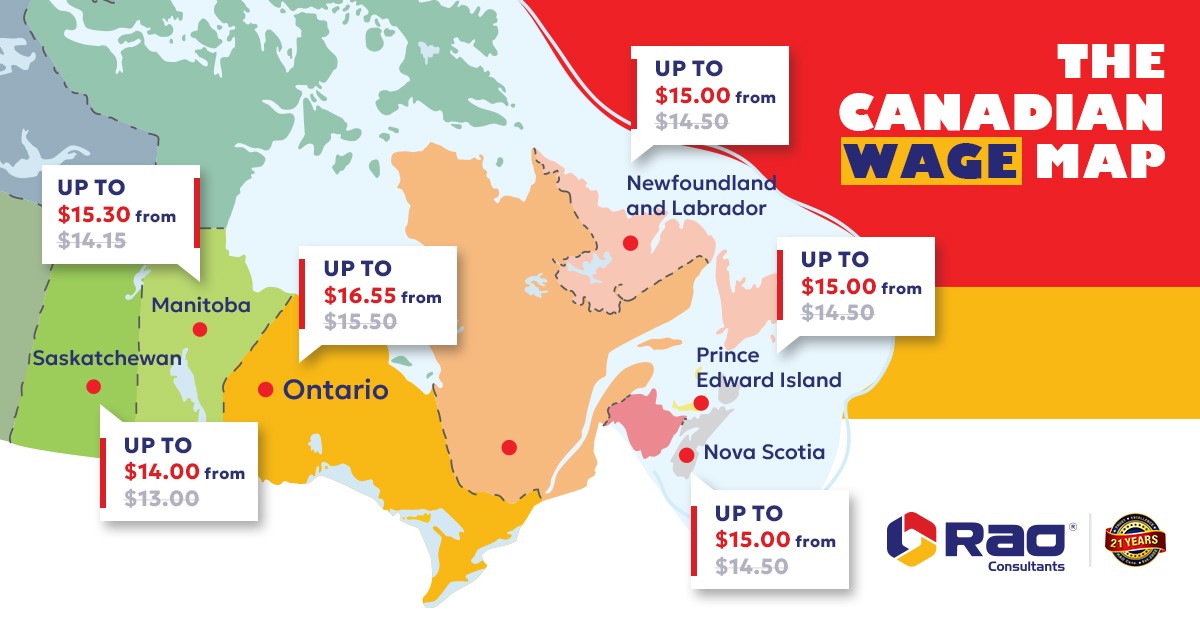
The Canadian Wage Map

Ontario: Empowering Workers, Strengthening Communities

Ontario, a province bustling with life and opportunity, will witness an increase in its minimum wage from $15.50 to $16.65. This is a testament to the government’s dedication to workers’ empowerment and financial well-being. It’s a stride toward improving the quality of life for Ontarians and contributing to the province’s overall economic prosperity.

Manitoba: Promoting Fair Wages and Inclusive Growth

In the heart of Manitoba, known for its diverse workforce and vibrant communities, the minimum wage will rise from $14.15 to $15.30. This reflects the province’s commitment to fair wages and an inclusive approach to growth. By offering better compensation to workers, Manitoba aims to attract skilled professionals to contribute to its thriving economy.

Saskatchewan, Nova Scotia, Newfoundland and Labrador, and Prince Edward Island (PEI): Ensuring a Brighter Future

These provinces are also set to increase their minimum wage rates, with Saskatchewan at $14.00, Nova Scotia and Newfoundland and Labrador at $15.00, and PEI at $15.00. These changes are a promise to build a brighter future for their residents. Competitive wages aim to retain local talent, draw in skilled immigrants, and create an environment where businesses can flourish.


Note: Saskatchewan is set to raise its minimum wage again in October 2024, going from $14.00 to $15.00 per hour, reinforcing its commitment to fair compensation and economic development.

Impact on Immigration

Canada remains steadfast in its commitment to welcoming immigrants amid recent diplomatic disputes. The nation recognises that immigration strengthens its economy and secures long-term growth. Increasing minimum wage rates across provinces reiterates Canada’s reputation as a land of opportunities.

Conclusion:

The surge in minimum wage rates in Canada, both federally and provincially, marks a substantial stride toward creating a more equitable and inclusive society. It uplifts working Canadians’ lives and sends a compelling message to those contemplating a future in Canada. With improved wages and higher living standards, Canada is an appealing destination for those seeking a better tomorrow.


As Canada continues to embrace immigrants, it reaffirms its dedication to diversity, inclusivity, and economic prosperity. The minimum wage increase reflects Canada’s progressive policies and determination to build a prosperous nation.


CTA: Learn more about Canada’s immigration process and how to make this land your home.


Please note that this article serves as informational guidance and does not constitute legal advice. For precise, up-to-date immigration information, consulting official government sources is recommended.

SCOPE FOR INTERLINKING

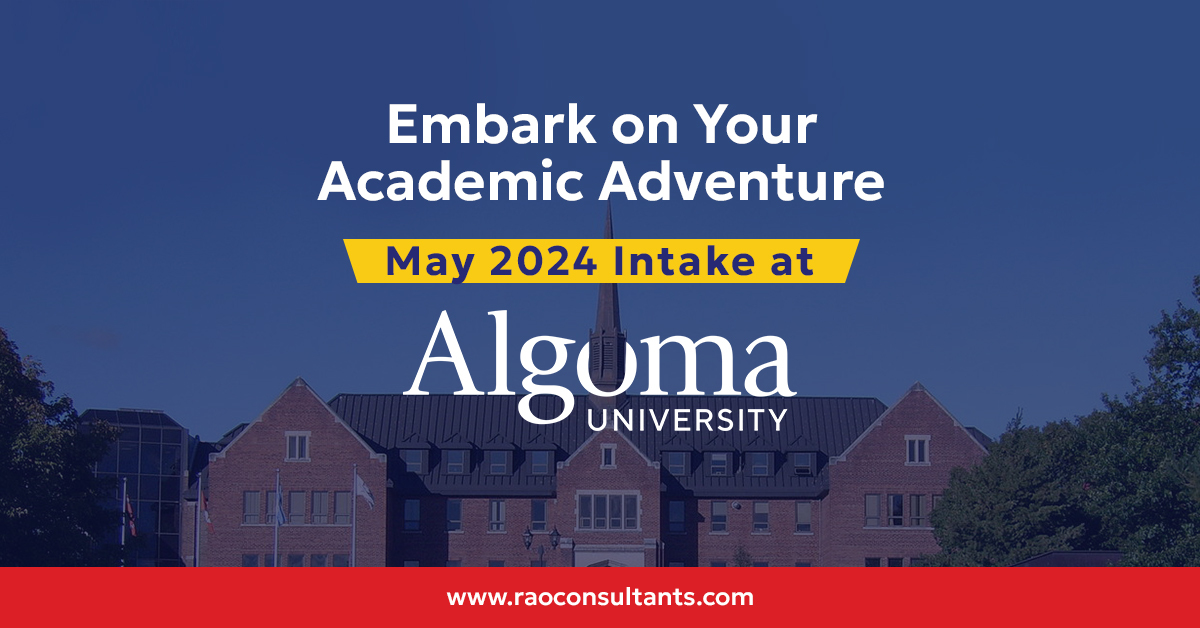
Embark on Your Academic Adventure: May 2024 Intake at Algoma University

Loading

Are you dreaming of pursuing your Higher Study in Canada? Algoma University is here to make that dream a reality. The university is currently accepting applications for the May 2024 intake, offering international students an exciting opportunity to immerse themselves in the charming city of Sault Ste. Marie, Ontario while pursuing their academic ambitions.

Algoma University boasts a diverse array of undergraduate and graduate programs, ranging from business and computer science to education, health sciences, and social sciences. What sets this institution apart is its strong emphasis on experiential learning. Students can gain invaluable practical skills through internships, co-op programs, and research opportunities, making their education not just theoretical but also practical.

Why to study in May 2024 intake?

Choosing the May intake can be a strategic move for several reasons. It allows students to kickstart their academic journey in the refreshing spring season, offering a unique perspective on the Canadian Education Experience.

Additionally, for those who may have missed the fall intake, the May intake provides an excellent opportunity to begin their studies without unnecessary delays.

If you’re considering this exciting opportunity, remember that the application deadline for the May 2024 intake is February 1, 2024.

To initiate your application, we will help you with essential documents which are required to submit, including transcripts, our experienced faculties will help you achieve the desired scores in Foreign going competitive exams, letters of recommendation, and a well-crafted Statement of Purpose that reflects your academic aspirations and personal journey.

Here are some compelling reasons why Algoma University should be at the top of your list:

  1. Algoma University offers the CA$ 6000 Scholarship/Bursaries* to every student
  2. It is one of Ontario’s smallest Universities with campuses located in Sault Ste. Marie, Timmins and Brampton
  3. The small class size offers increased interaction between students and faculty
  4. Excellent Student Support Team
  5. Affiliated with 16+ Countries Institutes

So, if the idea of studying in Algoma University appeals you here’s you need to do:

Find us on Google and we will guide you further.

With the deadline for the May 2024 intake approaching on February 1, 2024, it’s time to take the first step towards your academic aspirations.

Apply to Algoma University today and embark on a journey that quality education with the enriching experience of living in Canada’s stunning Sault Ste. Marie. For more information and to begin your application, please contact us.

Your academic adventure awaits!

Latest Update on Parents & Grand Parents Program 2023

Loading

Immigration, Refugees and Citizenship Canada (IRCC) has announced an update to the Parents and Grandparents Program (PGP) for 2023. The PGP allows Canadian citizens and permanent residents to sponsor their parents and grandparents for Canada PR .

Under the updated PGP, IRCC will accept up to 15,000 complete applications for sponsorship. This is the same number of applications that were accepted in 2022.

The PGP will be a lottery-based system, and IRCC will randomly select 24,200 prospective sponsors to apply. The invitations to apply will be sent out over a two-week period starting on October 10, 2023.

To be eligible to sponsor a parent or grandparent under the PGP, the sponsor must:

  • Be a Canadian citizen or permanent resident
  • Be at least 18 years old
  • Have a valid Canadian SIN
  • Meet the income requirements
  • Not be inadmissible to Canada

The income requirements for the PGP are based on the Low-Income Cut Off (LICO). The LICO is the minimum income level that a household needs to meet its basic needs.

The PGP is a popular program, and demand for sponsorship far exceeds the number of spots available. In 2022, IRCC received over 100,000 applications for the PGP, but only accepted 15,000 applications.

If you are interested in sponsoring your parents or grandparents under the PGP, you can start preparing your application now. The application process can be complex, so it is important to start early.

You can find more information about the PGP on the IRCC website, and with our experts help you can call your parents and grandparents in Canada.

Here are some additional details about the update to the PGP:

  • The processing time for the PGP is typically 12-18 months.
  • Parents and grandparents who are sponsored under the PGP are eligible to apply for permanent residency after they have lived in Canada for at least two years.

The PGP is a great way to reunite families and bring loved ones to Canada. If you are eligible to sponsor your parents or grandparents, I encourage you to apply.

The Super Visa

The Super Visa presents a sought-after choice for Canadian citizens and permanent residents seeking to facilitate the arrival of their foreign parents and grandparents to Canada.

This visa is a temporary permit, granting parents and grandparents the privilege of visiting their families for a continuous period of up to five years, eliminating the need for frequent visitor status renewals. Super Visa holders also enjoy the advantage of multiple entries into Canada for a period of up to 10 years. Additionally, those already in possession of a Super Visa may potentially extend their stay in Canada as visitors for up to seven years.

One notable feature of the Super Visa is its consistent availability throughout the year, making it a particularly appealing option for sponsors who value predictability in the process of bringing their parents or grandparents to Canada.

To qualify for the Super Visa, applicants must meet the following criteria:

  1. Be a parent or grandparent of a Canadian citizen or permanent resident.
  2. Exhibit no inadmissibility to Canada on grounds of criminality or health.
  3. Demonstrate the ability to meet income requirements as outlined by the Low-Income Cut Off (LICO).
  4. Furnish a signed invitation letter from their child or grandchild in Canada, including a commitment to provide financial support for the entire duration of the visit and a comprehensive list of household members and their numbers.
  5. Provide evidence of medical insurance coverage for a minimum of one year, obtained from a Canadian insurance company.

Rising North: Canada’s Immigration Elevator – Up, Down, or Hold?

Loading

After assuming the role of Canada’s new Minister overseeing Immigration, Refugees, and Citizenship Canada (IRCC), Marc Miller has communicated his initial public statements by engaging in conversations with Red FM Canada, CBC Radio Canada, and Bloomberg News.

These discussions provide us with insights into his perspective concerning important aspects of the Canadian immigration landscape.

Regarding the current levels of immigration and the benefits of increased migration to Canada, Minister Miller has expressed his belief in immigration’s significance in addressing labour shortages across various sectors in Canada, including industries like agriculture and healthcare.

Miller emphasizes that immigration plays a vital role in the process of “developing [Canada], enhancing its quality, and ensuring the prosperity of its economy.”

Expanding on the significance of immigration for the nation, Miller underscores that immigration serves as a strategy for Canada to address the challenges posed by its aging native population. Consequently, the IRCC’s strategy involves maintaining the current immigration levels or potentially increasing them progressively.

According to Miller, the prospect of reducing immigration targets is not something he envisions, given the substantial demand. He acknowledges that while a potential adjustment upward is under consideration, the notion of lowering the targets is not within the scope of his outlook.

The Status of Economic Immigration and Express Entry

Canada’s emphasis on economic immigration remains unwavering and will continue as a priority. Highlighting that approximately 60% of the nation’s immigration currently falls under the “economically directed” category, the newly appointed Minister of Immigration in Canada has made it clear that the IRCC’s intention is to maintain this proportion.

Simultaneously, Miller acknowledges that the processing times for economic immigrants throughout Canada have not met the IRCC’s desired standards. He mentions that the government is actively working to streamline these processing times in the future.

Regarding Express Entry and, more specifically, the new category-based draws implemented by the IRCC, Miller notes that the federal government is committed to swiftly bringing in skilled immigrants who are needed in critical trades across the country.

Addressing International Student Fraud

In light of the recent national spotlight on cases of international student fraud, including a situation affecting around 700 international students across Canada, the IRCC recognizes the necessity of addressing this issue head-on.

Miller comprehends that the current visa process for international students in Canada has led to “integrity challenges,” causing significant distress for those seeking higher education opportunities in the country. International students, according to Miller, are sometimes given “misleading hope,” resulting in their inability to pursue their aspirations within Canada.

Consequently, the IRCC recognizes the need to enhance protection for international students arriving in Canada, ensuring that fraudulent individuals cannot exploit those who are seeking a better life through Canadian education.

Dispelling the Link Between Housing Challenges and Immigration

According to Miller, attributing housing supply challenges across Canada solely to immigration is inaccurate. Therefore, Miller takes issue with the common assertion that immigrants are solely responsible for housing shortages and inflated housing costs.

In reality, Miller contends that this issue is far more intricate. He argues that the dramatic increase in home equity values or housing costs has minimal correlation with immigration.

In fact, Miller challenges the connection between housing supply problems and immigration by underscoring that immigration itself could hold the solutions to some of Canada’s most pressing issues, including housing supply.

“If Canadians want accessible healthcare, dental care, and affordable housing, the most effective approach is to welcome skilled labour to the country.”

The Future of Immigration in Canada

In an effort to instil confidence in both Canadians and incoming immigrants, Miller reiterates his commitment to fairness and compassion as Canada’s new Minister of Immigration.

The IRCC acknowledges the imperfections within Canada’s immigration system, particularly in relation to recognizing foreign credentials. Miller recognizes the unfairness of requiring incoming immigrants to relinquish the hard-earned skills and experience gained in their professions from their home countries.

Miller emphasizes the importance of open discussions between Canada’s federal government and its provinces and territories to properly regulate professions in the country, given that immigration remains integral to Canada’s past, present, and future.

“I am here to contribute to a government that values openness, fairness, and compassion in our immigration system. This system shapes the future of the country and its identity, and I am proud to be a part of it.”